

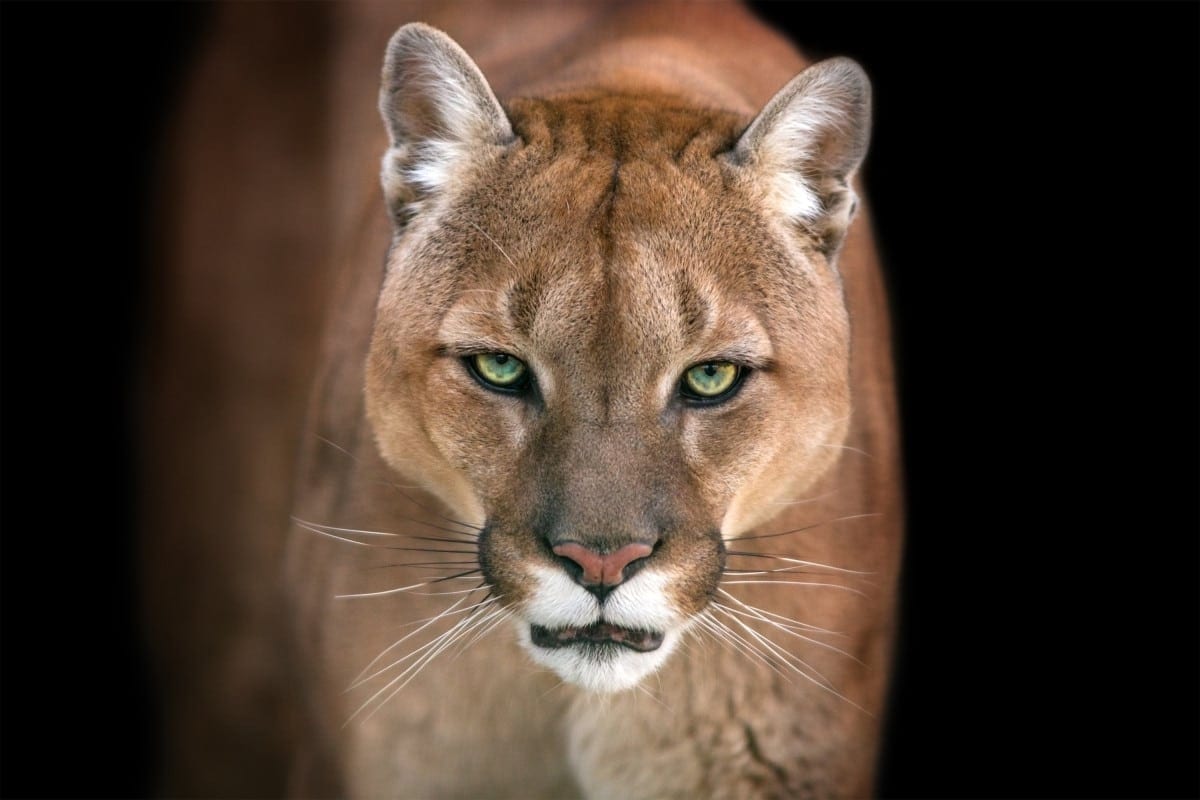
Mountain Lion Hunting
Mountain lion hunting — also known as cougar or puma hunting — is one of the most exciting and physically demanding pursuits available to big-game hunters in the American West. Vast mountain ranges, deep canyons, and rugged terrain define the lion’s domain, and pursuing a mature tom through that country is an unforgettable adventure. Our outfitter works with experienced houndsmen whose well-trained dogs make the chase possible, and whose intimate knowledge of the land puts hunters in front of trophy-class animals.
What to Expect on a Mountain Lion Hunt
No two mountain lion hunts are exactly alike. The pursuit relies heavily on finding a fresh track — typically in snow — and then releasing a trained pack of hounds to follow the scent. Once the dogs tree the lion, the real work begins: reaching the treed cat often requires a demanding hike through steep, technical terrain. As one hunter noted after an Idaho hunt, the tom he harvested “happened to be the farthest lion harvested from the road in the outfitter’s history of hunting that area” — a reminder that lions write their own script.
- Glassing and tracking: Hunters typically cover country in trucks, ATVs, and snowmobiles to locate a fresh, promising track before turning out the hounds.
- Hound work: The dogs are the stars of the show. Professionally bred and trained hounds do the heavy lifting, running the track and treeing the lion. If you have never hunted with hounds, you will quickly develop a deep respect for what these animals can do.
- The tree: Once the cat is treed, hunters must reach it — sometimes quickly, sometimes after a grueling climb up a canyon. Physical fitness is a genuine asset on these hunts.
- The harvest: Mountain lions can be taken with rifles, muzzleloaders, or archery equipment, depending on hunter preference and local regulations. One notable Idaho tom was harvested with archery equipment, demonstrating the versatility these hunts can offer.
- Trophy care: A mature tom is a spectacular trophy. Full-body mounts are popular — one hunter who harvested a 140-plus-pound Idaho tom with a 14¾-inch skull chose a full-body mount to commemorate the achievement.
Prime Destinations for Mountain Lion Hunting
Several Western states offer outstanding mountain lion hunting opportunities, each with its own licensing structure and terrain.
- Idaho: Idaho’s deep canyons and diverse habitat support a healthy lion population. Combo hunts pairing mountain lion with wolf and bobcat are available, and wolf sign is often abundant in prime lion country.
- Colorado: Colorado is widely regarded as excellent mountain lion country due to over-the-counter tag availability, reliable snow for tracking, and a strong population of mature toms. Hunts typically run from December through mid-February. Outfitters may operate across vast acreage of private land and BLM ground.
- Utah: Utah Conservation Permits — administered through a program that has raised more than million for wildlife and habitat since 1981 — are available for mountain lion, among many other species. More than 90 percent of that revenue has gone directly toward projects benefiting the species for which each permit was issued, including habitat enhancement, species transplants, radio telemetry studies, research projects, aerial surveys, and public education.
- New Mexico, Arizona, Montana, Nevada, and Wyoming also offer mountain lion hunting opportunities. Contact our outfitter to learn which destination best fits your goals and schedule.
Physical Demands
Mountain lion hunting ranges from moderately demanding to extremely strenuous, depending entirely on where the lion decides to go. One Idaho hunt was described by a participant as “physically difficult,” while another archery hunter in the same state found his particular experience to be relatively manageable. Expect steep terrain, unpredictable distances, and the need to move quickly once the dogs have a cat treed. Arriving in good physical condition will make the experience safer and more enjoyable.
The Role of the Houndsman
Your guide and houndsman are central to the success of a mountain lion hunt. A skilled houndsman reads tracks, manages the dog pack, and makes critical decisions about when and where to turn out. As one hunter put it after his Idaho hunt, the houndsman was “hands down among the best,” working harder than anyone could have asked for and packing the harvested tom out on a long walk from a remote drainage. When the cat is down, your guide’s work is far from over.
Archery Mountain Lion Hunting
For hunters seeking an additional challenge, mountain lions can be pursued with archery equipment. Because hounds tree the lion, the shot distance is typically manageable even for bowhunters. One Idaho hunter successfully harvested a large tom with archery equipment on a last-minute cancellation hunt — a testament to how quickly our outfitter can assemble a quality experience when an opening becomes available.
Conservation and Wildlife Management
Mountain lion hunting is a regulated activity in every state where it is offered, and license and tag revenue contributes meaningfully to wildlife management programs. Utah’s Conservation Permit Program is one example of how hunting dollars fund direct conservation work — including habitat restoration, aerial surveys, and research — that benefits mountain lions and many other species across the landscape.
Plan Your Mountain Lion Hunt
Whether you are drawn to the deep canyons of Idaho, the vast private and public lands of Colorado, or the conservation-minded permit system of Utah, our outfitter is ready to help match you with the right destination, the right houndsman, and the right timeframe for your mountain lion hunt. Reach out today to start the conversation.