
Introduction to European Trophy Sizing
Hunting big game in Europe is a totally different experience, especially when it comes to scoring and trophy evaluation. Unlike North America’s inch-based systems, European scoring often incorporates weight as a key factor, reflecting the animal’s overall mass, age and health. The primary system used is the CIC method, which combines measurements, weight, and even “beauty points” for aesthetics like symmetry and pearling. This guide breaks down sizing for popular European big game animals, including verified typical trophy weights, and translates them to North American equivalents using Boone & Crockett (B&C) or similar inch-focused scores. Whether you’re a hunter planning a trip or a wildlife manager, understanding these differences can refine your strategies and boost success rates.
We’ll cover red deer, roe deer, fallow deer, wild boar, chamois, and moose—focusing on medal thresholds (bronze, silver, gold) and real-world examples.
The CIC Scoring System: How Weight Plays a Role
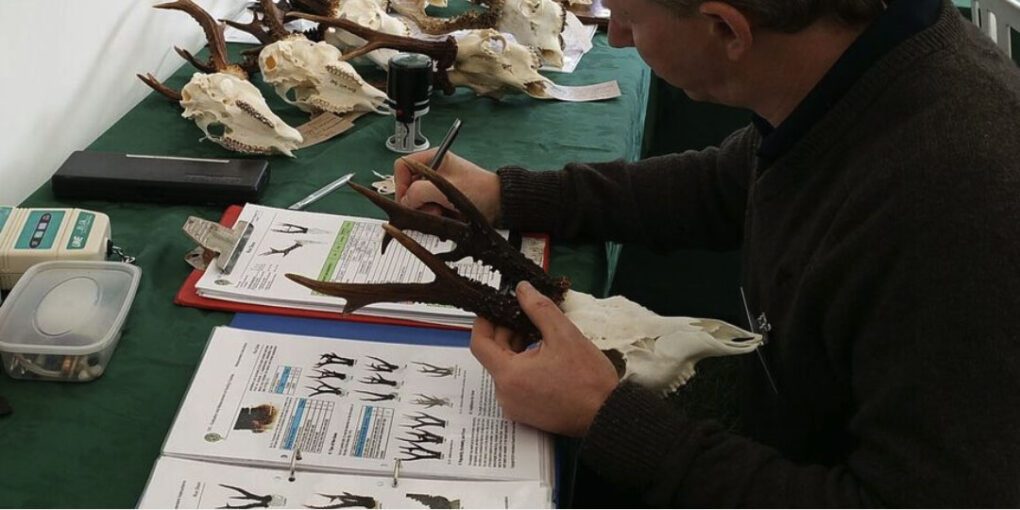
The CIC (International Council for Game and Wildlife Conservation) system, established in the early 20th century, evaluates trophies holistically. For antlered species like deer, it includes:
- Linear Measurements: Length of beams, tines, and circumferences (in cm).
- Weight: Net dry weight of the skull and antlers (after a 30-day drying period), multiplied by a factor (e.g., 0.5-1 point per gram for roe deer).
- Beauty and Deductions: Up to 10-20 points for color, pearling*, and symmetry; deductions for irregularities.
- Formula Example for Roe Deer: (Average antler length × 0.5) + (Circumference × 1) + (Volume in cc × 0.2) + (Net weight in grams × 0.1) + beauty points – deductions.
*Pearling refers to the rough, raised texture or bumps on the surface of a deer’s antlers.
Medal thresholds vary by species and region, but bronze starts around 105-170 CIC points, silver 130-190, and gold 160-210+. Weight is crucial for species like red, roe, and fallow deer, as it indicates nutrition and age—older bucks often hit 5-10 kg in antler/skull mass for top scores.
In contrast, North America’s B&C system is measurement-only, using inches for spread, tine length, and circumference, with deductions for asymmetry. No weight factor—it’s all about massiveness and perfection. A CIC gold might equate to a B&C “all-time” entry, but direct conversions aren’t perfect due to the weight emphasis.
Red Deer (Cervus elaphus): Europe’s Iconic Stag
Red deer, or stags, are Europe’s largest deer, with trophies prized for their multi-point antlers. CIC scoring heavily weights the antlers and skull.
- Typical Trophy Sizes:
- Bronze (160+ CIC points): Dry skull/antler weight ~4.7 kg, main beam length ~80 cm average, 8-12 points.
- Silver (180+): Weight ~5.5-6 kg, beams ~90 cm, 12-16 points.
- Gold (190+): Weight 6-7+ kg, beams 100+ cm, 14-20+ points (e.g., a record Scottish stag hit 210+ points with 7 kg weight).
- Verified Examples: In Scotland, a 2024 gold medal stag weighed 6.8 kg dry, scoring 195 CIC points. Central European variants (e.g., Hungary) can reach 8-10 kg for world-class trophies.
- North American Translation: B&C equivalents focus on spread (60-70 inches for top scores) and mass. A CIC gold red deer might measure 200-250 B&C inches, similar to a large elk, but without weight, Europeans value denser, heavier racks.
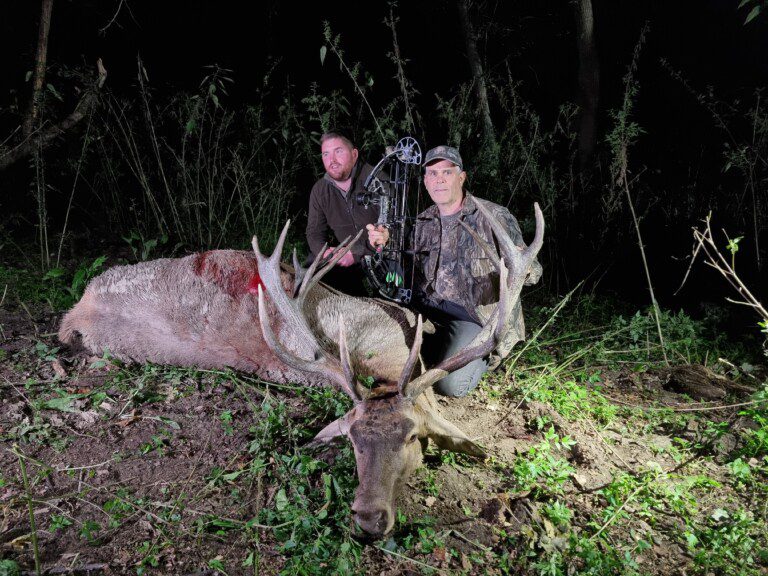
7.5kg Red Stag
Translates roughly to 320-360 inches gross SCI (or equivalent B&C-style inches)
Roe Deer (Capreolus capreolus): Compact but Coveted
Roe bucks are smaller but produce stunning six-point antlers. Weight is a dominant factor in CIC, often 40-50% of the score.
- Typical Trophy Sizes:
- Bronze (105+ CIC points): Dry skull weight 455+ g, antler length 22-25 cm, volume 150+ cc.
- Silver (130+): Weight 510+ g, length 25-28 cm, volume 165+ cc.
- Gold (160+): Weight 570+ g, length 28+ cm, volume 200+ cc (e.g., UK records exceed 210 points with 600-700 g weights).
- Verified Examples: A 2023 Scottish roe buck weighed 620 g dry, scoring 185 CIC points. In Romania, trophies average 280-350 g net for bronze.
- North American Translation: No direct B&C equivalent (roe aren’t native), but imagine a whitetail: A gold roe might span 20-25 inches total, scoring 120-150 B&C inches if measured similarly—emphasis on tine symmetry over weight.
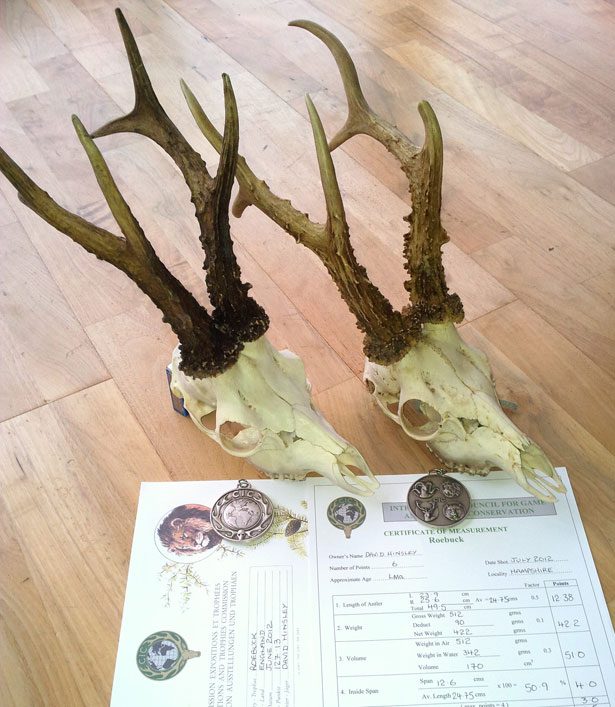
Two Silver Medal Roe Bucks
Fallow Deer (Dama dama): Palmate Antlers with Weight Emphasis
Fallow bucks have broad, palmate antlers, and CIC rewards weight alongside palm width.
- Typical Trophy Sizes:
- Bronze (170+ CIC points): Dry net weight ~3 kg, antler length ~60 cm, palm width 14+ cm.
- Silver (190+): Weight 3.5-4 kg, length 65-70 cm, palm 16+ cm.
- Gold (210+): Weight 4+ kg, length 70+ cm, palm 18+ cm.
- Verified Examples: English park-origin fallow often hit 4.5 kg for gold, scoring 220+ points.
- North American Translation: B&C scores fallow (introduced in some areas) by inches: A gold CIC might equal 180-220 B&C inches, focusing on palm spread (20-30 inches) without weight.
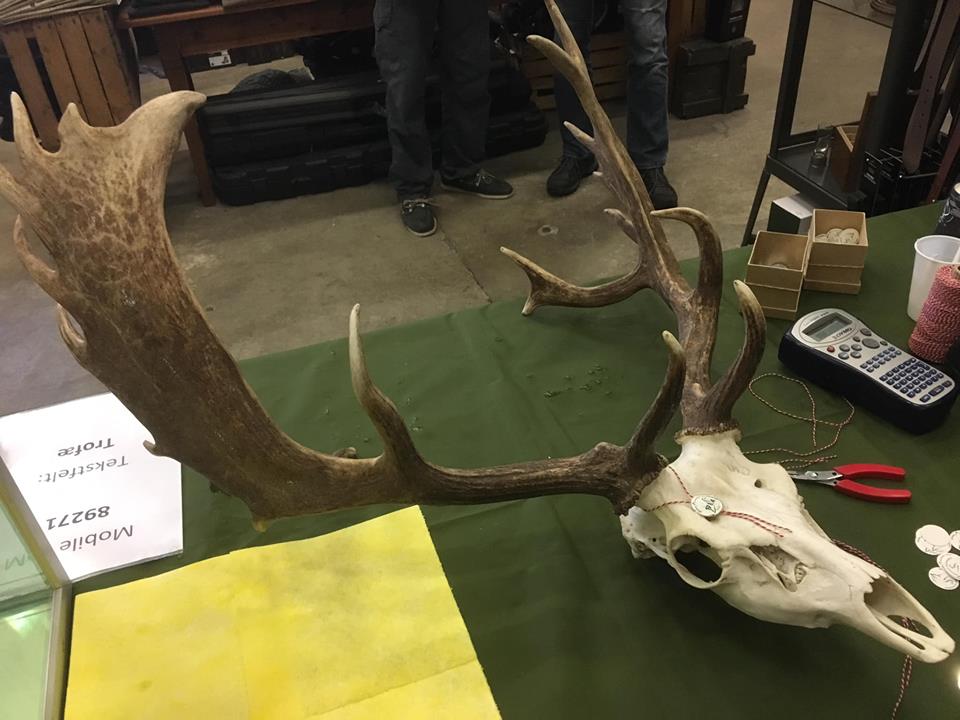
Silver Medal Fallow Buck Scoring 178 CIC
Wild Boar (Sus scrofa): Tusks Over Weight
Unlike deer, wild boar trophies are tusks, scored by length and circumference—no direct weight, but overall boar size (200-300 kg body weight) correlates with trophy quality.
- Typical Trophy Sizes:
- Bronze (110+ CIC points): Average tusk length 18-20 cm, circumference 4-5 cm.
- Silver (115+): Length 20-22 cm, circumference 5+ cm.
- Gold (120+): Length 22+ cm (e.g., Hungarian records hit 27 cm).
- Verified Examples: A 2024 Bulgarian gold boar had 25 cm tusks, scoring 135 points; body weight ~250 kg.
- North American Translation: SCI (Safari Club International, similar to B&C for exotics) uses inches: Gold CIC tusks might measure 9-11 inches, scoring 20-25 SCI points per tusk.
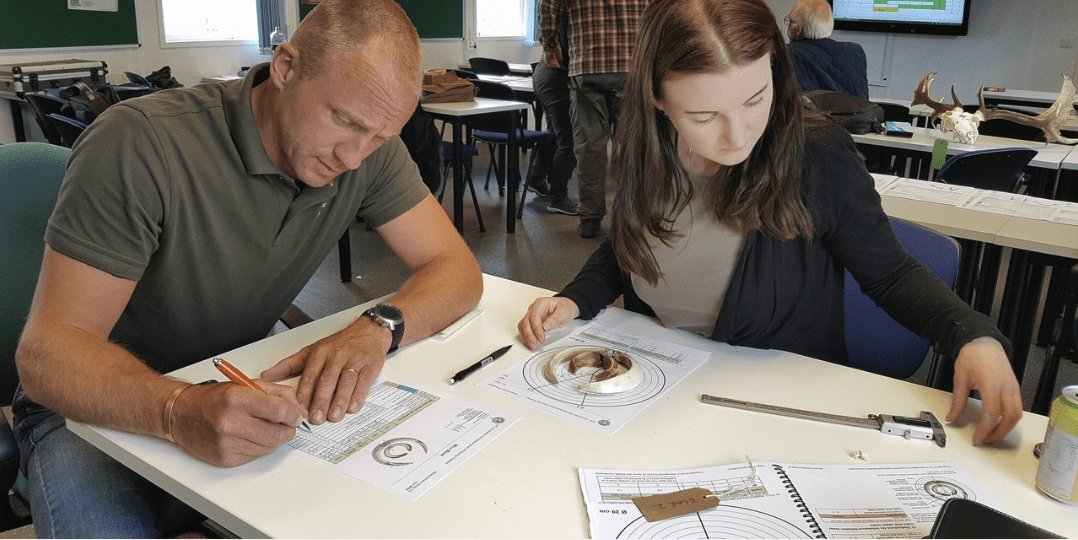
Measuring Wild Boar Tusks
Chamois (Rupicapra rupicapra): Horn-Focused Mountain Game
Chamois horns are hooked and measured by length and base—no weight in CIC, but trophy size ties to animal maturity (20-30 kg body weight).
- Typical Trophy Sizes:
- Bronze (95+ CIC points): Horn length 22-25 cm, base circumference 7-8 cm.
- Silver (100+): Length 25-27 cm, base 8+ cm.
- Gold (105+): Length 27+ cm (e.g., Carpathian records reach 30 cm).
- Verified Examples: Romanian chamois average 25 cm for silver, with 28 cm golds.
- North American Translation: Similar to bighorn sheep in B&C: Gold chamois horns might score 150-170 inches total curl length.
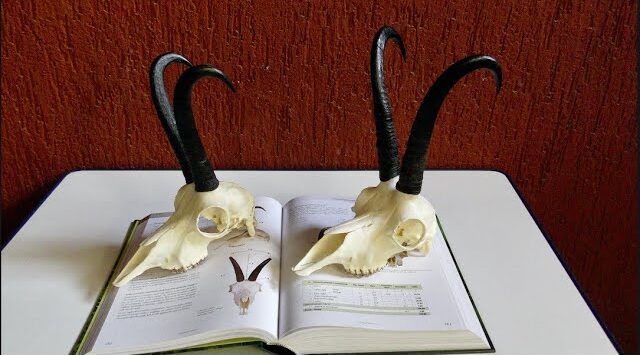
A Pair of Giant Chamois
Moose (Alces alces): Europe’s Giant with Palmate Antlers
European moose (Eurasian elk) are scored by measurements, with minimal weight influence—spread and palm size dominate.
- Typical Trophy Sizes:
- Bronze (300+ CIC points): Antler spread 100-120 cm, palm length 80+ cm, 10-14 points.
- Silver (350+): Spread 120-140 cm, palm 90+ cm.
- Gold (400+): Spread 140+ cm (records hit 200 cm, weights 30-40 kg antlers).
- Verified Examples: Scandinavian golds weigh 25-35 kg in antlers, scoring 450+ points.
- North American Translation: B&C is nearly identical: A European gold might hit 400-450 B&C inches, like Alaskan moose, with 60-70 inch spreads.
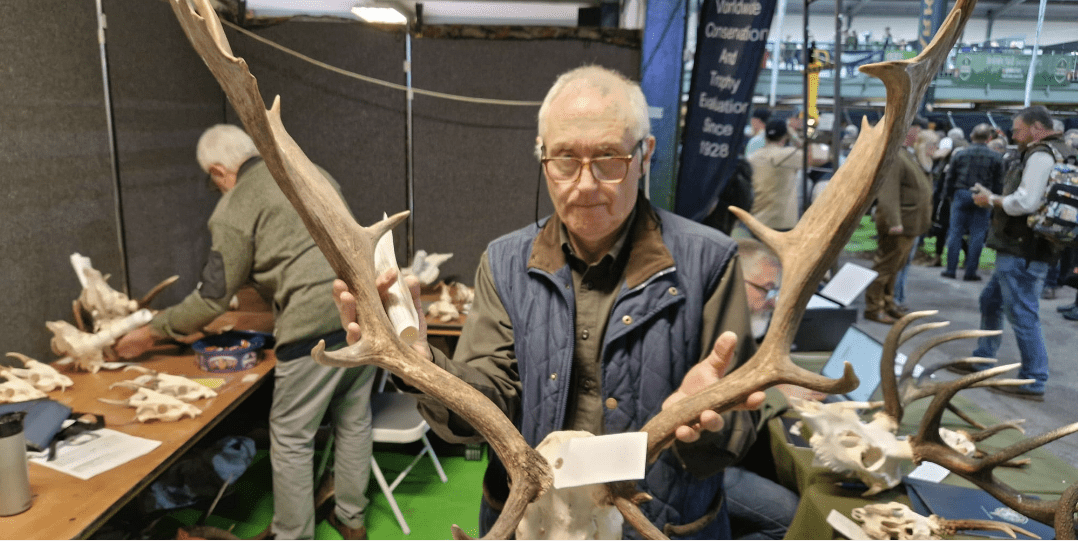
Key Differences: European Weight vs. North American Inches
- Pros of CIC: Rewards overall animal quality (weight indicates habitat health), includes subjective beauty for uniqueness.
- Cons: Weight can vary by drying/prep; less standardized across regions.
- Pros of B&C: Objective, easy to measure in field; emphasizes symmetry for conservation.
- Cons: Ignores mass density.
- Conversion Tip: Multiply CIC points by 1.1-1.5 for rough B&C inch estimates (e.g., 200 CIC ~ 250-300 inches), but consult official measurers.
Conclusion: Choosing Your Trophy System
Whether hunting in the Scottish Highlands or Romanian mountains, understanding CIC’s weight-inclusive approach versus B&C’s inch-based precision helps set realistic goals. For top ranks, focus on well-managed areas with nutrient-rich habitats. Always verify with certified measurers—contact CIC or B&C for official scoring.
Live Like You Mean It
Contact Us
We've helped thousands of OI clients plan their adventures
Our team of professional consultants are ready to help you research, book and plan an amazing trip with one of our amazing outfitter partners around the world.


I didn't think an experience like this was possible.
This trip, was, for me at least not just a trip, for me it was a real adventure, a real experience. I love the wilderness and this trip afforded me the opportunity to connect with the Alaskan wilderness in ways very few people do. It was an experience I will never forgot in a place I can’t wait to get back to.
Oliver Fischer
The outfitter handled everything perfectly.
We were thankful that Outdoors International hooked us up with a great outfitter because they were able to find us an acceptable alternate on short notice. Overall the two year process to get this float in was seamless and worry free. Just like it should be.
Thank you,
Stan Masneri
What an amazing experience!
The lodge was out of this world! Our rooms, the delicious food, the incredible wildlife and the scenery were amazing. Our photo safari guide was truly exceptional and had us on animals almost constantly. We saw over 30 different species and had some incredible up close experiences. Africa is amazing!
Scott Navares
Copyright 2005-2026 © Outdoors International™ · All Rights Reserved.