
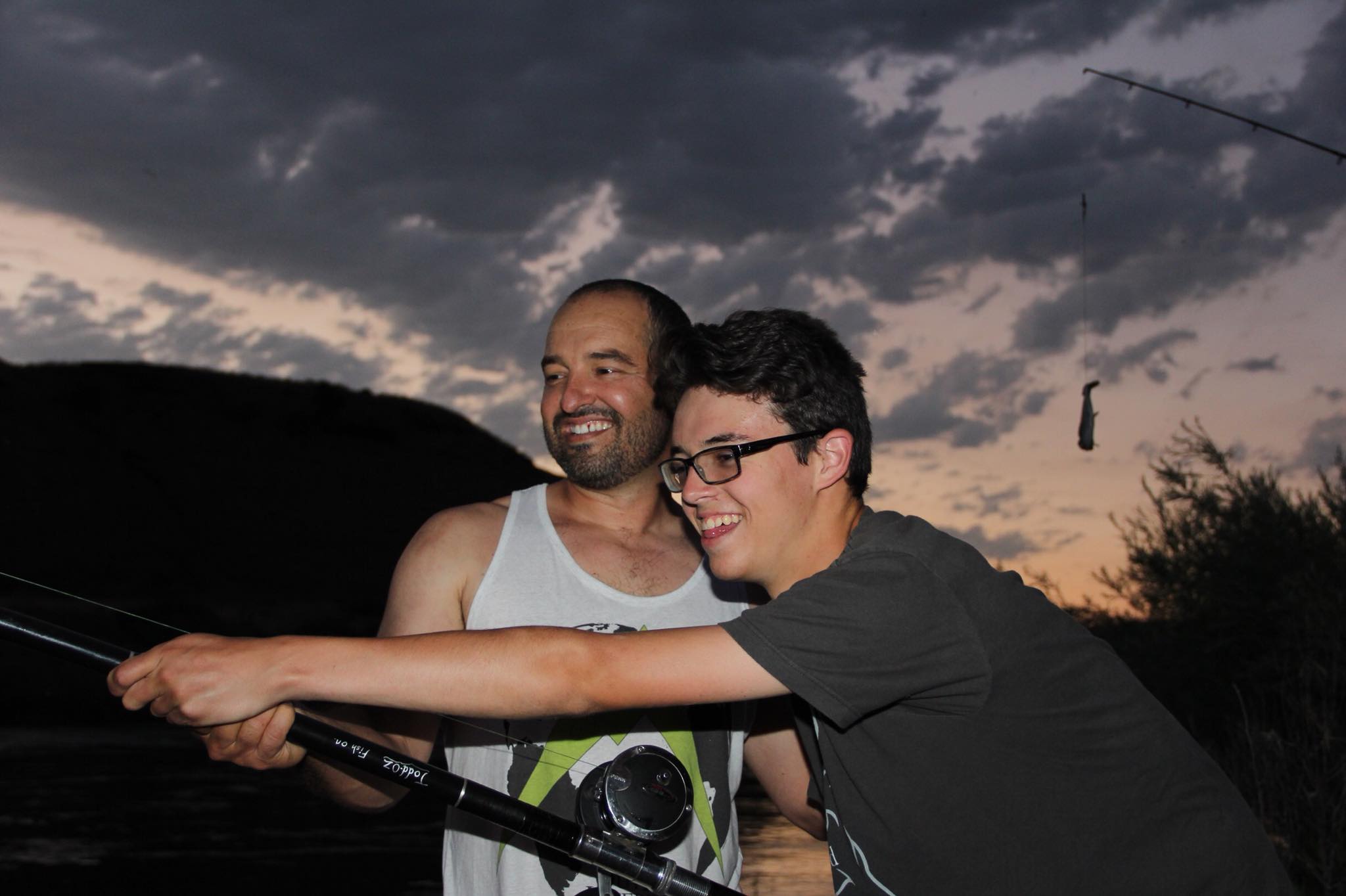
Here are some tips for catching sturgeon…they aren’t super technical fish, but if you don’t know the basics of how to catch sturgeon, you’re going to struggle.
Fish where the sturgeon are.
It seems obvious, but lots of fishermen fall into the trap of fishing a “dry hole”. I’ve been guilty of it too. Sturgeon move a lot. If you haven’t had a hit for 45 minutes, we suggest moving to a new hole. They’re somewhere, and when you find them, they’ll be biting.
Where to catch sturgeon
Sturgeon are bottom-dwellers that prefer deep, slow-moving water with a soft substrate — think silt, sand, or gravel. In rivers, look for deep holes, channel edges, and the soft water just downstream of a fast riffle. They use their sensitive rostrum (the paddle-like snout) to root along the bottom, so anywhere food naturally collects is a good starting point.
In the Pacific Northwest, the Columbia River and its tributaries — including the Willamette — are some of the best-known white sturgeon fisheries in North America. The Snake River, Kootenai River in Idaho, and the Fraser River system in British Columbia are also worth knowing about. On the East Coast, Atlantic sturgeon can be found in larger coastal rivers like the Hudson, Delaware, and Savannah. In the interior, lake sturgeon inhabit the Great Lakes system and many large northern rivers.
Key structural features to target:
- Deep holes adjacent to current seams — sturgeon hold in slack water and dart into the current to feed.
- Confluences — where a tributary meets a main river, baitfish stack up and sturgeon follow.
- Below dams and falls — classic holding areas, especially during upstream migrations.
- Tidal influenced reaches — incoming tides push bait and scent upstream, triggering feeding in tidal rivers.
Prime time for sturgeon fishing.
There are a lot of variables when it comes to catching sturgeon. Time of year, time of day, water temperatures all play in on the best time to fish. May, June, October and November are the most popular months, but sturgeon can be caught year round. The peak temperature for fishing is when the water is between 50 and 65 degrees.
Within the day, early morning and the two hours before and after a tidal change tend to produce the most action in tidal rivers. In non-tidal rivers, pay attention to rising or falling water — sturgeon often go on the feed when river levels are changing, which is when baitfish get displaced and swept into the current.
What’s the best bait for sturgeon?
Use fresh bait that has lots of scent….and it’s not a terrible idea to enhance the scent either. Some fishermen even use things such as WD-40.
Most anglers use shad for bait, but other favorites are lamprey and smelt, squid, sand shrimp, and even nightcrawlers. Where we live, it is legal to use “morts” from local hatcheries. Morts are just hatchery fish that have died. It doesn’t get much better than a 8-10 inch hatchery trout mort. Make sure that this is legal in your area though.
If you’re bait is freezer burned or has soaked for awhile, it loses its smell and won’t catch sturgeon. Fresh bait full of blood, guts and a good and nasty slime coat catches fish. Plain and simple. Change your bait twice as often as you think you should.
Matching bait to season and location
Sturgeon are opportunistic and their preferred forage shifts with the season. In spring, when eulachon (candlefish) runs are happening on Pacific coast rivers, fresh or brined eulachon can be hard to beat. Later in summer, cut shad or whole smelt work well when those fish are present. Sand shrimp shine in tidal, brackish-water fisheries. In freshwater lake or river systems away from the coast, nightcrawlers, crayfish tails, and cut sucker meat are reliable options.
A good rule of thumb: use what is native and abundant in the water you’re fishing. Sturgeon have been living there a long time and their noses are tuned to what belongs.
Tackle for sturgeon fishing.
Use heavy, power casting rods ranging from 5 1/2 to 11 feet with a large capacity baitcasting reel with a free spool clicker. Load your reel with 40 to 100 pound test abrasion resistant monofilament line. *Sturgeon are very light, cautious biters, so be sure to purchase a rod with a light tip.
There are lots of ways to rig up, but the most popular is a three-way swivel with a six inch dropper line on one loop holding the sinker. The weight of the sinker will vary depending on the current. Bell and pyramid sinkers stick to the bottom best. The other swivel loop will be tied to an 18 inch, heavy mono leader tied to a 8/0 to 10/0 hook. Red anodized hooks stay sharp the longest, but the red color gets worn away. Black hooks stay almost as sharp, and they stay black. Both are good choices. Some anglers use a spin-n-glow or a corkie above the hook as an attractor.
Setting the hook on a sturgeon
This is where a lot of anglers lose fish. Because sturgeon have tough, cartilaginous mouths and are cautious biters, you need to let them take the bait and move off with it before you drive the hook home. That’s why the free-spool clicker matters so much — you can feel and hear the fish picking up the bait without it feeling resistance and dropping it.
When the rod loads up and line is peeling steadily, engage the reel, reel down to remove slack, and then set the hook hard — multiple times. A single soft hookset on a sturgeon is rarely enough. Drive that hook point through with a strong, sweeping set, and keep your rod tip up to maintain pressure throughout the fight.
Fighting a sturgeon is a workout!
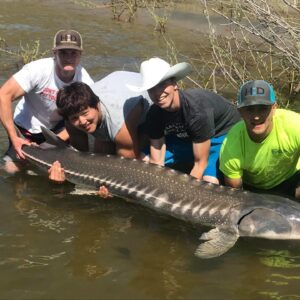
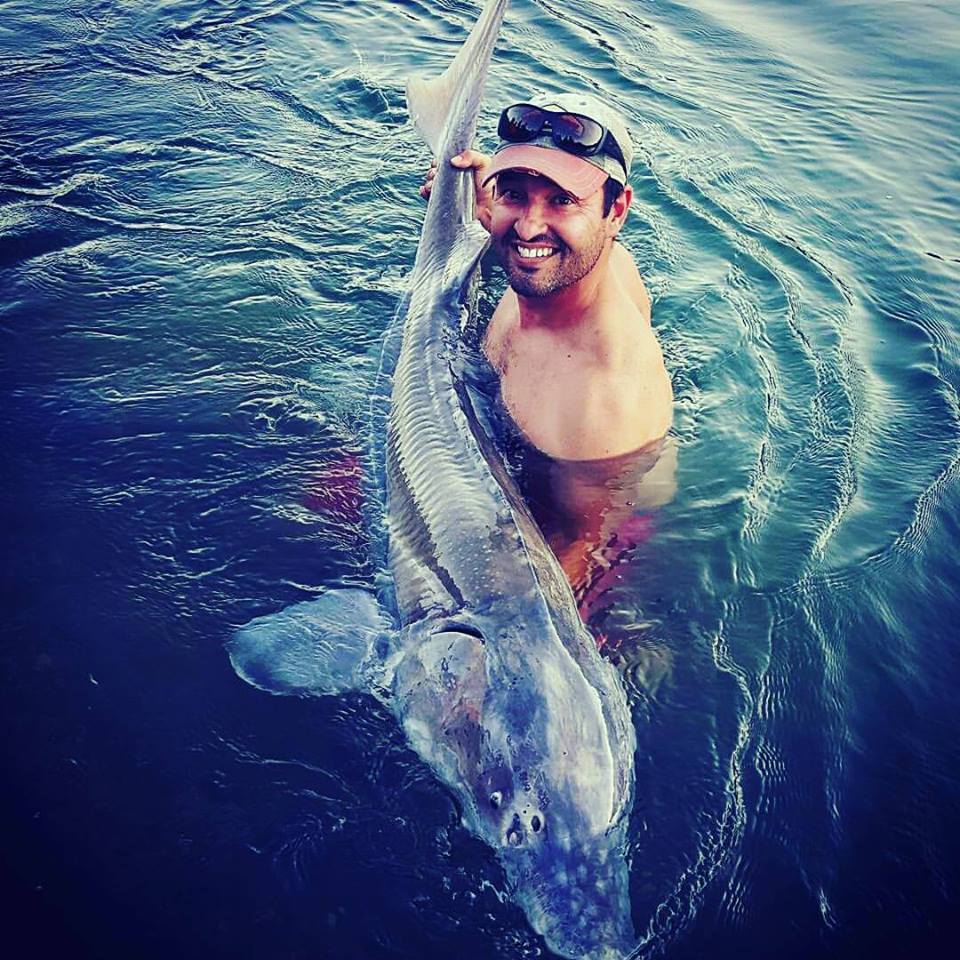
These river monsters can be over 10 feet long and weigh hundreds of pounds! A fight can sometimes take up to an hour, with both angler and fish being exhausted once it’s finally landed. Expect some fantastic aerial acrobatics during your sturgeon fishing battle.
Handling and releasing sturgeon
Most sturgeon fisheries are catch-and-release or have strict slot limits — only fish within a specific size range may be kept. Know the regulations for your river before you go. When releasing a sturgeon, keep it in the water as much as possible. Never drag a large sturgeon onto dry ground by itself — their organs aren’t designed to support their weight out of water, and doing so can cause internal injury. Support the fish horizontally, let it recover in the current, and release it head-first into the flow once it’s kicking strongly on its own.
Hire a sturgeon fishing guide.
Outdoors International works some great sturgeon guides and outfitters that put our clients on fish year after year. So if you’re looking for a great fishing trip, get in touch. We think you’ll love working with us.




I didn't think an experience like this was possible.
This trip, was, for me at least not just a trip, for me it was a real adventure, a real experience. I love the wilderness and this trip afforded me the opportunity to connect with the Alaskan wilderness in ways very few people do. It was an experience I will never forgot in a place I can’t wait to get back to.Oliver Fischer
The outfitter handled everything perfectly.
We were thankful that Outdoors International hooked us up with a great outfitter because they were able to find us an acceptable alternate on short notice. Overall the two year process to get this float in was seamless and worry free. Just like it should be.Thank you, Stan Masneri
What an amazing experience!
The lodge was out of this world! Our rooms, the delicious food, the incredible wildlife and the scenery were amazing. Our photo safari guide was truly exceptional and had us on animals almost constantly. We saw over 30 different species and had some incredible up close experiences. Africa is amazing!Scott Navares
Copyright 2005-2026 © Outdoors International™ · All Rights Reserved.