Why Pakistan Deserves a Place on Every Mountain Hunter's Radar
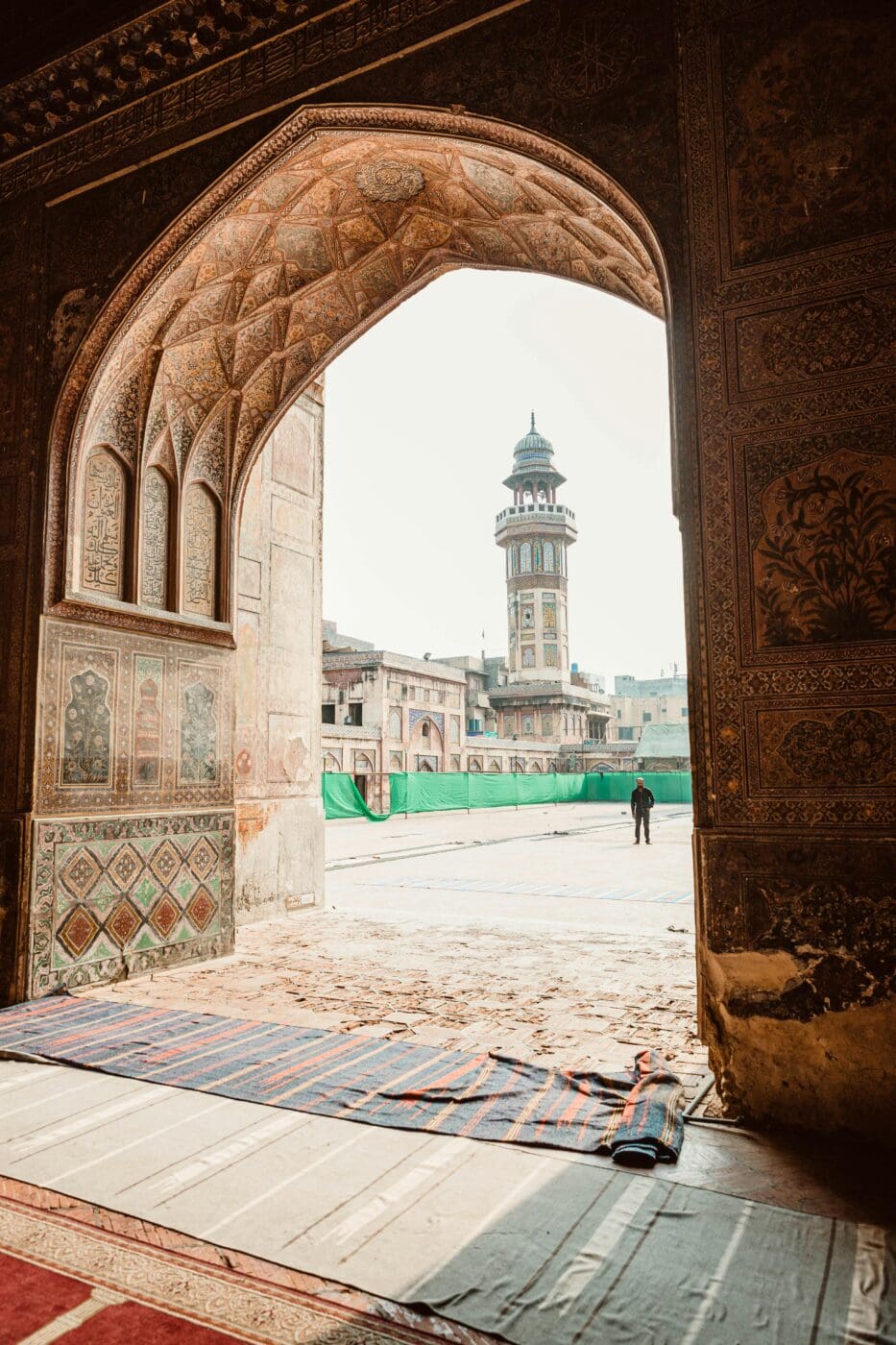
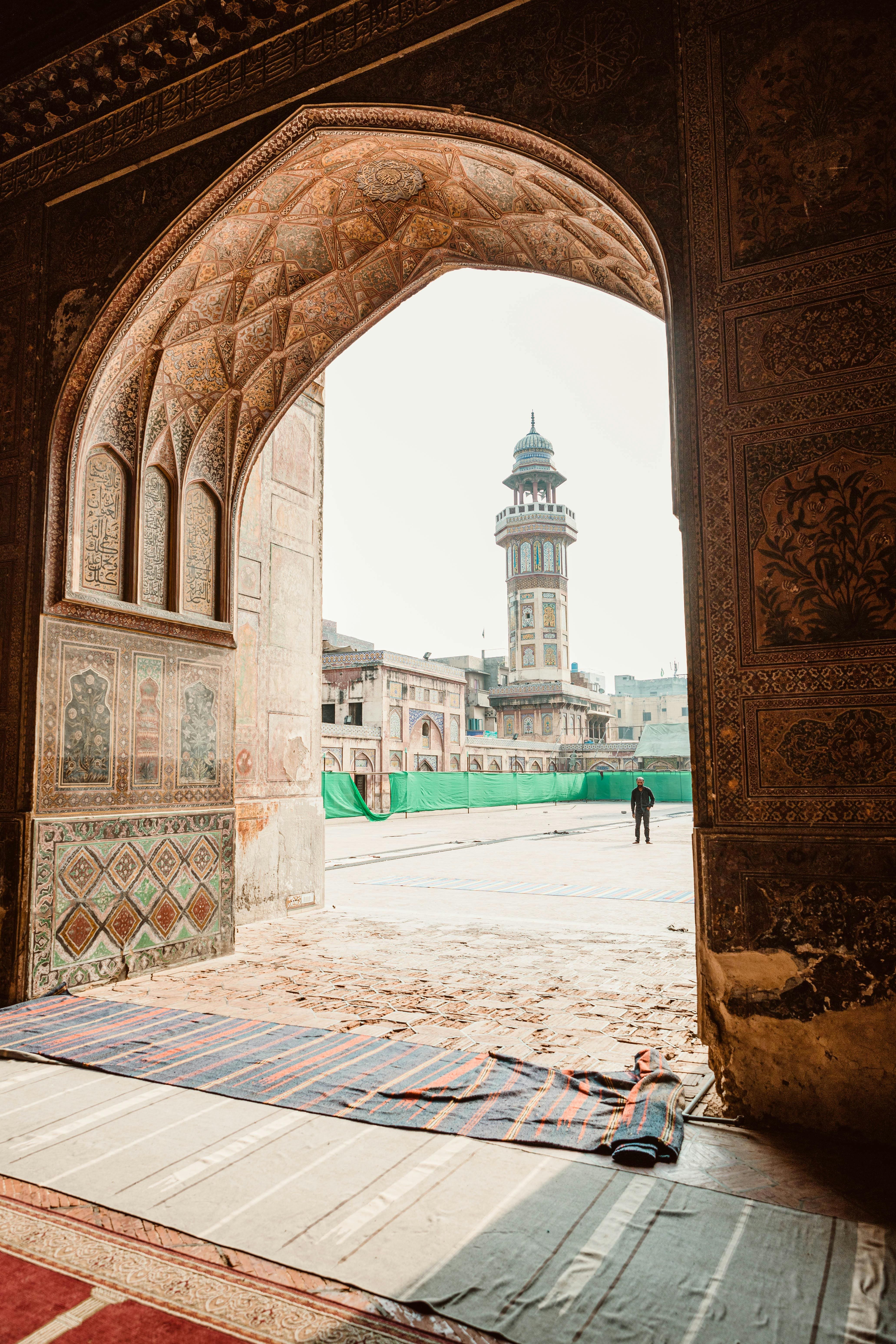
Pakistan stands as one of the world's most dramatic and underrated hunting destinations. Rising from the Arabian Sea to the Karakoram crest, the country's geography spans some of Earth's most remote and wildlife-rich terrain. For hunters seeking authentic big-game expeditions in untamed mountains, Pakistan delivers on every front: challenging hunts, pristine habitat, and unforgettable cultural immersion in one of Asia's last great wilderness frontiers.
Five Legendary Mountain Sheep and Goats
Pakistan's trophy roster reads like a dream list for dedicated hunters. The region is home to five prized species that define serious Asian mountain hunting, each offering a distinct challenge and reward.
The Legendary Markhor: The Trophy That Started It All
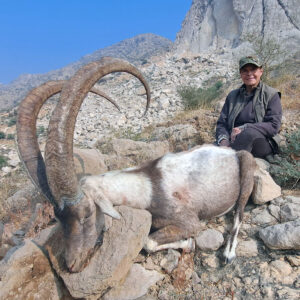
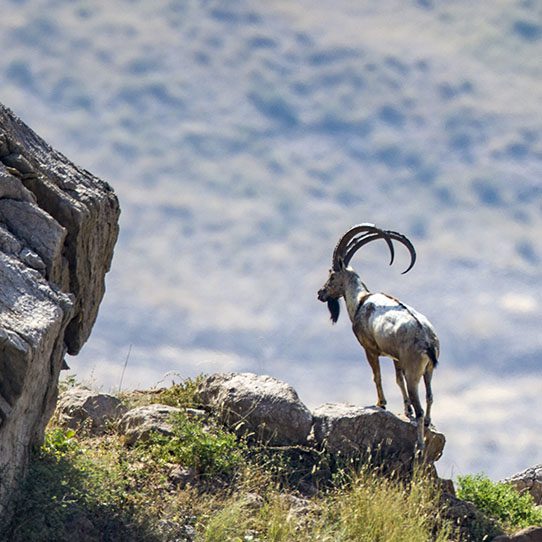
For many hunters, Pakistan is synonymous with the markhor—widely considered one of the most coveted trophies in the world. The markhor, the world's largest wild goat species, holds near-mythical status among trophy hunters, and for good reason. These remarkable animals inhabit some of the most dramatic mountain landscapes on earth, their signature spiral horns a prize that commands respect.
Markhor hunts demand more than luck. They require a lust for exotic travel, patience, physical endurance, and serious long-range shooting ability. The reward is the opportunity to pursue one of the most iconic wild goats on the planet while supporting conservation programs that have helped markhor populations flourish across several regions of the country. Once nearly extinct, the markhor's rebound from fewer than 2,500 animals in 2011 to "near-threatened" status today stands as one of the world's great conservation success stories—a story written partly by trophy hunters who've financially fueled protection efforts.
Markhors are found exclusively in the northern mountains of Pakistan, Afghanistan, and Tajikistan. Pakistan's populations, particularly in areas like the Chitral, Kohistan, and Hindukush ranges, represent some of the most huntable and productive markhor habitat in their range. These goats thrive on steep, rocky terrain at elevations between 6,000 and 12,000 feet. Their mastery of vertical rock faces is extraordinary—they navigate cliffs that appear impassable, often feeding in areas accessible only to the most determined and fit hunters.
Pakistan is home to five huntable markhor subspecies: the Bukharan, Astor, Kashmir, Kabul, and Sulaiman markhor, each with its own character and challenge.
Beyond the Markhor: Asia's Most Diverse Mountain Game
While the markhor draws headlines, Pakistan's true appeal lies in its staggering variety of mountain and desert game. With 20+ species of big game animals available to hunt, Pakistan offers combinations that are difficult to find elsewhere.
Sindh Ibex and Himalayan Ibex: Pakistan's Desert and Alpine Goats
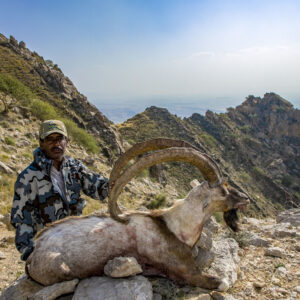
Pakistan hosts two distinct ibex subspecies, each commanding respect and adapted perfectly to its terrain. The Sindh ibex inhabits the desert ranges of southern and central Pakistan, particularly in Balochistan, while the Himalayan ibex dominates the high plateaus and steep slopes of the northern Himalayas and Karakoram.
The Sindh ibex is a desert specialist, built for survival in arid, rocky terrain. These goats have heavily outward-sweeping horns and a lean, muscular build suited to life in sparse, high-desert environments. They are found primarily in the Balochistan region at elevations between 3,000 and 8,000 feet, navigating rocky ridges and hidden basins in some of the world's most pristine and underutilized desert landscape. Sindh ibex hunts offer a different rhythm than their northern cousins: longer stalks in extreme visibility, minimal crowds, and authentic wilderness encounters in landscapes of stark beauty.
The Himalayan ibex, by contrast, thrives in Alpine terrain—high plateaus, forested slopes, and rocky summits at elevations often exceeding 10,000 feet. These goats are larger and more robust than Sindh ibex, with impressive heavily ridged horns. They inhabit the northern territories, including areas of Gilgit-Baltistan and the high ranges of Kohistan and Chitral. Himalayan ibex hunts are expedition-grade endeavors: steep terrain, high altitude, thin air, and the constant presence of snow and exposure. Success requires serious physical conditioning and mountaineering experience.
Both ibex species offer genuine hunting challenges. Spotting and stalking in open country demands discipline, fieldcraft, and the ability to close distances on animals with exceptional vision and wariness. Ibex hunts typically span 7–12 days and often can be combined with other species, particularly urial or blue sheep, to create a comprehensive mountain hunting experience.
Blanford Urial: The Spectacular Desert Ram
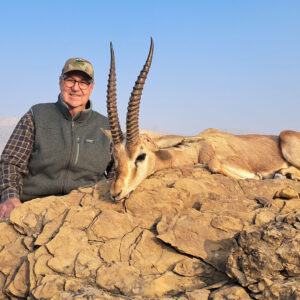
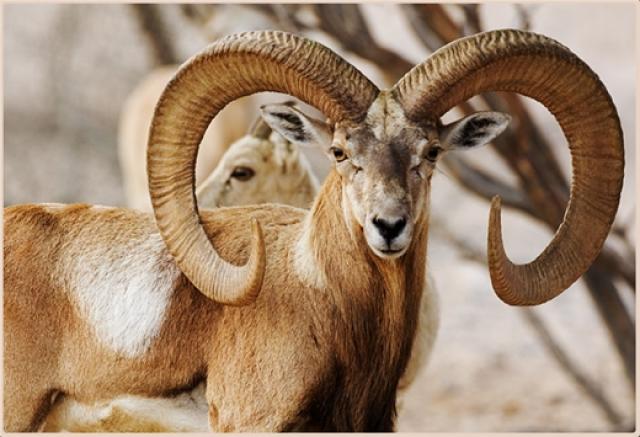
The Blanford urial—a wild sheep species found in Pakistan's central ranges—combines the challenge of high-altitude hunting with the reward of one of the world's most impressive horns. Urials are characterized by their heavy, outward-sweeping horns, impressive body size, and commanding presence on the mountain.
Blanford urial occupy the Balochistan plateau and adjacent ranges at elevations between 4,000 and 8,000 feet, in terrain that straddles desert and alpine conditions. The landscape is dramatic: open plateaus with scattered rocky outcrops, hidden valleys, and views that stretch for miles. These rams are social animals, often found in small groups or bachelor herds. They are highly wary and possess exceptional eyesight—hunting them demands hours of careful glassing and patient stalking across open country.
A urial hunt is a classic high-desert mountain experience. Days consist of glassing likely basins and ridges from vantage points, then executing long stalks across exposed terrain to within rifle range. Urial hunts typically last 7–10 days and pair excellently with Sindh ibex or other Balochistan species. The combination of two distinct species in one expedition offers exceptional value and maximizes your time in Pakistan's dramatic desert mountains.
Blue Sheep: The Remote High-Alpine Prize
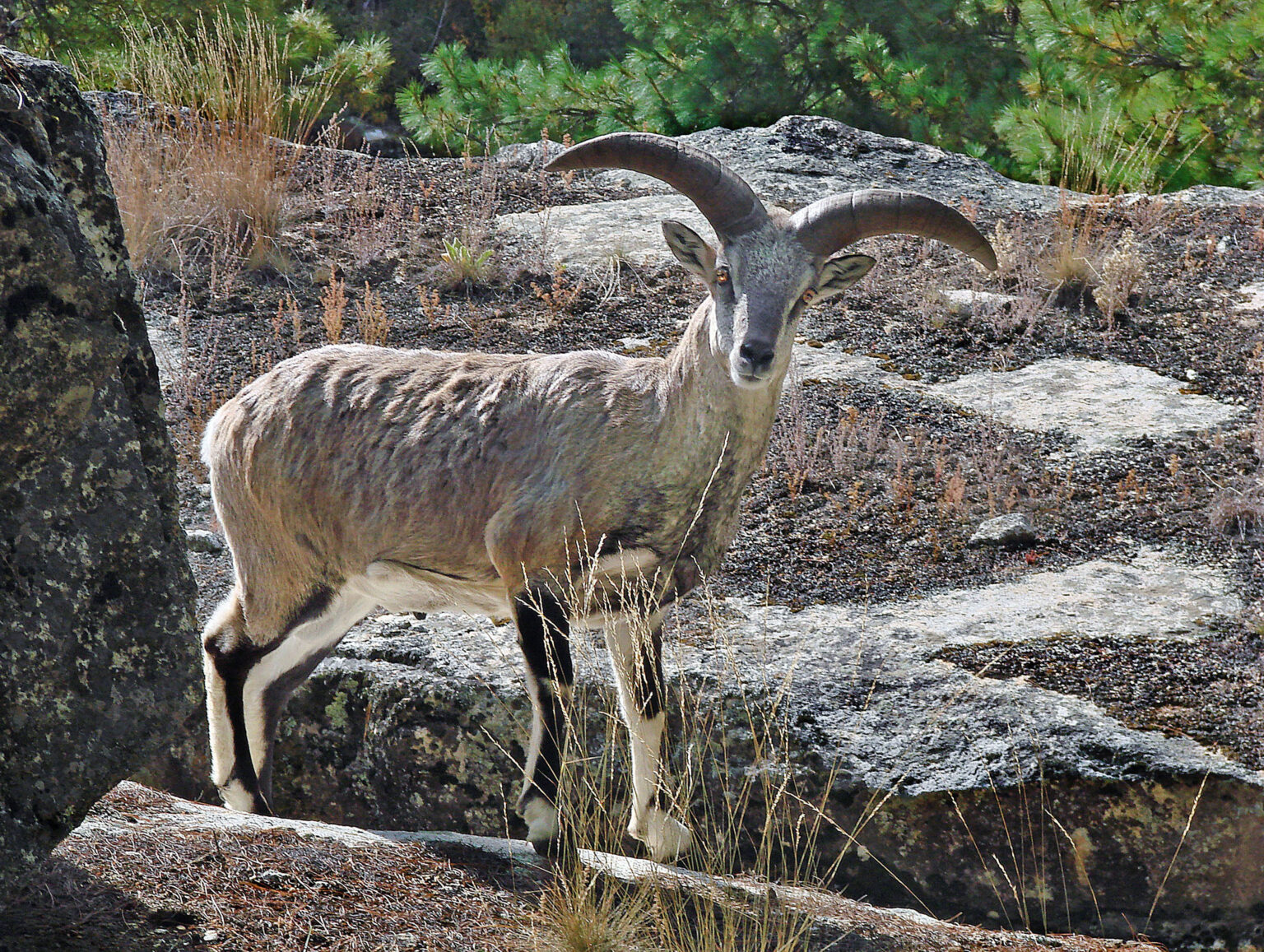
Blue sheep (also called bharal) are smaller than urial or ibex but offer a genuine expedition experience in Pakistan's highest and most remote terrain. These goat-sheep hybrids inhabit alpine meadows and rocky slopes in the Himalayas and Karakoram at elevations of 10,000–15,000 feet and beyond.
Blue sheep are typically pursued by committed hunters willing to accept the extreme conditions: altitude, thin air, snow, and isolation. They are found in some of the world's most pristine mountain wilderness—areas where few other hunters venture. A blue sheep hunt is a bucket-list experience for hunters seeking solitude, alpine beauty, and the challenge of hunting at extreme elevation. These hunts require serious physical training and acclimatization; they are not for casual hunters but for dedicated mountaineers in pursuit of a genuine wilderness experience.
Two Dramatically Different Hunting Regions
Balochistan Province: Desert Hunts and Exceptional Combination Opportunities
Equally exciting to the markhor are classic combination hunts in Balochistan province—hunters commonly pursue Blanford urial alongside Sindh ibex, often encountering mature trophies of both species in the same day. These rugged desert mountains have earned a reputation for exceptional trophy quality. Blandford urial in the well-managed Dureji hunting area regularly feature horns measuring 26–30 inches, with recent world-record specimens pushing 35–36 inches. The Sindh ibex, a rare and elusive desert dweller, provides the perfect complement to a urial hunt, and the combination has become a signature Pakistan experience.
The Northern Mountains: Alpine Basins and High-Altitude Hunts
Further north, in the spectacular alpine basins of the Himalayas and Karakoram, hunters can pursue blue sheep alongside Himalayan ibex. These hunts reward the physically capable and offer the dramatic scenery that defines high-altitude mountain hunting. The combination of challenging terrain, thin air, and wild country creates experiences that linger long after the hunt ends.
Pakistan's Hidden Strength: The Hunting Experience Itself
What sets Pakistan apart from other world-class hunting destinations isn't just the trophies or the terrain—it's the complete hunting experience.
Cultural Immersion
Beyond the wildlife, Pakistan's rich culture and hospitality are central to the experience. Evenings in camp include traditional meals, hunt stories, and a genuine sense of brotherhood reflecting the region's deep cultural heritage. Hunters who return from Pakistan often speak not just of the trophies they took, but of the relationships they built, the meals they shared, and the generosity of guides and local communities who've made hunting in their mountains a lifetime pursuit.
Accessible Yet Authentic
Unlike some remote hunting destinations that require extreme logistics, Pakistan combines accessibility with authenticity. Well-maintained road networks, domestic flights, and experienced local guides ensure your hunting adventure is as seamless as possible—yet the hunting itself remains wild and uncompromised. You get genuine mountain hunting without sacrificing basic comfort or wasting days in transit.
Exceptional Value
Pakistan delivers exceptional value for the serious hunter. Compared to other premium hunting destinations, the cost of hunting in Pakistan is remarkably reasonable, making world-class mountain hunts accessible to a broader range of hunters. You can pursue iconic trophies at a fraction of the price you'd pay in competitor destinations—without sacrificing quality, safety, or the caliber of the experience.
When to Hunt Pakistan
The prime hunting seasons vary by species and region:
- Blandford Urial & Sindh Ibex (Balochistan): November–March, with January–March offering optimal weather
- Markhor (Northern Mountains): Typically September–November (pre-winter) or March–May (post-winter), depending on subspecies and elevation
- Blue Sheep & Himalayan Ibex (Alpine): Often late summer through fall, weather-dependent
Each season brings different challenges and rewards; work with an experienced outfitter to match your skills and preferences to the right timing.
The Complete Picture: Why Pakistan Hunts Matter
Pakistan hunting isn't about a single trophy. It's about experiencing one of the world's most diverse and dramatic mountain hunting ecosystems. Whether you're pursuing the legendary markhor, combining desert game in Balochistan, or climbing into the alpine for blue sheep and ibex, you're engaging with real mountains, wild animals, and authentic cultures. The trophies you take will hang on your wall; the experiences and relationships will stay with you forever.
Ready to Explore Pakistan Hunting?
Learn more about specific hunts in Pakistan:
Contact our team to discuss which Pakistan hunt aligns with your goals, physical ability, and timeline. Our consultants have boots-on-the-ground experience with Pakistan outfitters and can help you plan a hunt that delivers on the promise of this remarkable destination.
Get More Information
Plan Your Hunt Today