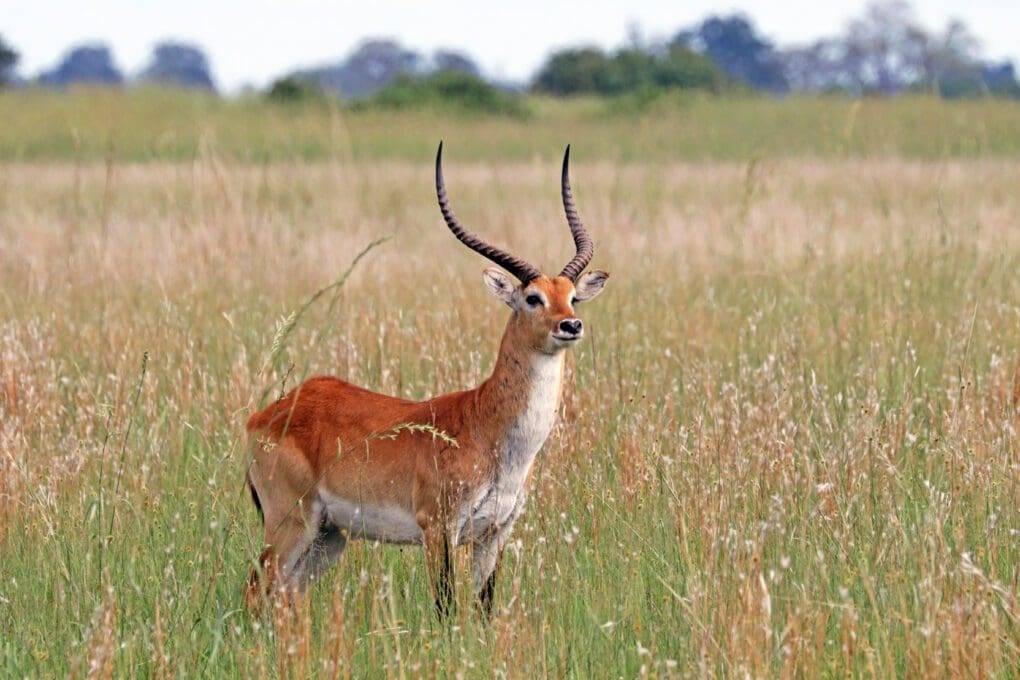
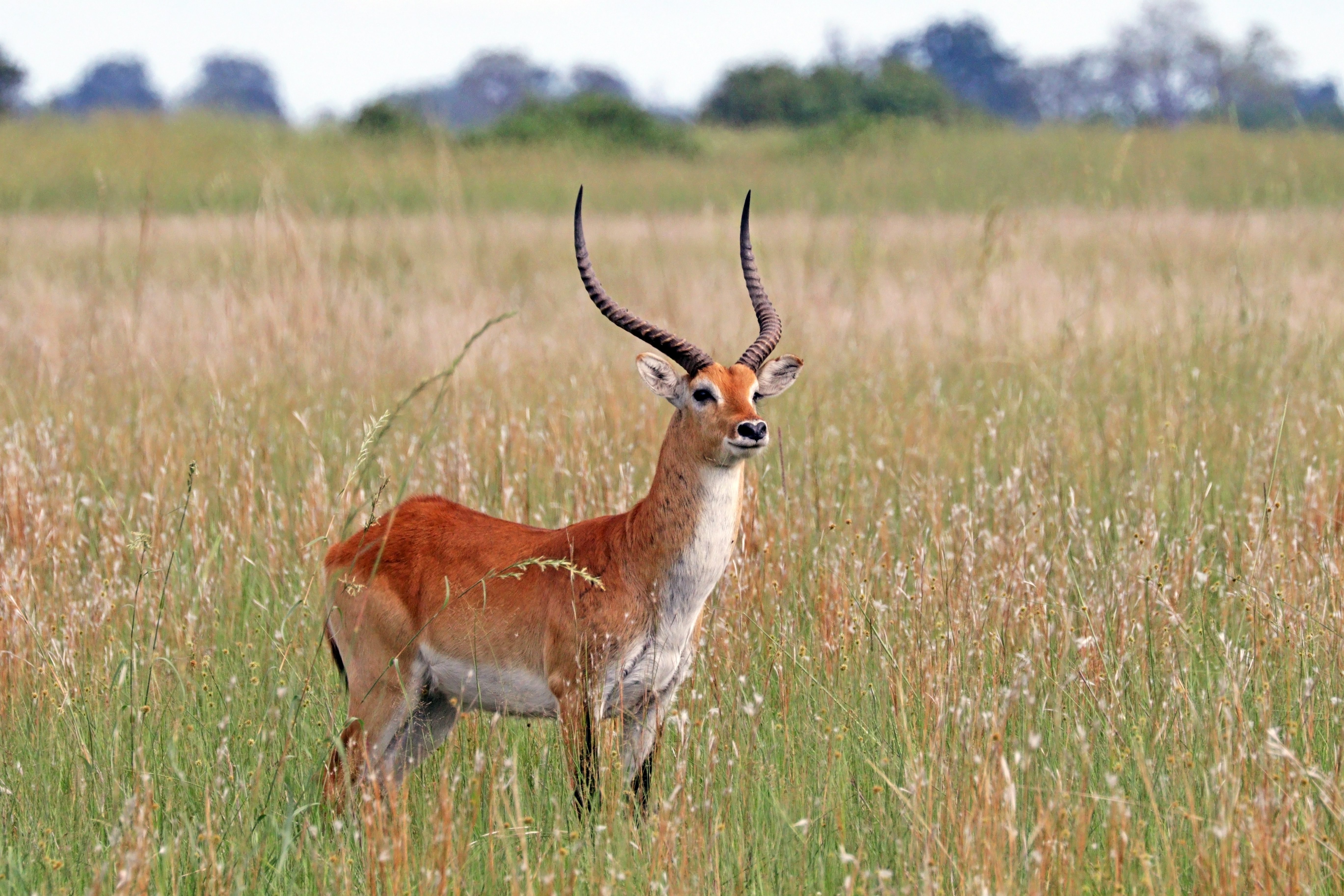
Lechwe (Kobus leche) are medium-sized African antelope built for life in and around seasonal floodplains and swamps. Their elongated hooves and powerful hindquarters allow them to move through shallow water and reed beds at a speed that surprises most hunters on their first encounter. Two subspecies draw the most hunting interest: the red lechwe, widespread across southern Africa's wetland systems, and the Nile lechwe (Kobus megaceros), a darker, more dramatically marked animal native to the swamps of South Sudan and surrounding regions.
Where Lechwe Are Hunted
Red lechwe are the more accessible of the two. They are available on Plains Game Hunting in South Africa itineraries and are frequently included alongside Cape Buffalo Hunts when a hunter wants to round out a mixed bag. Private game properties in South Africa's Limpopo, Northern Cape, and North West provinces manage healthy populations, and the species also appears on quality concessions in Zambia and Botswana near major river systems.
Nile lechwe hunting is a more specialized undertaking, historically associated with Sudan and South Sudan. Availability shifts with political conditions and conservation status, so hunters serious about a Nile lechwe need current, firsthand intelligence — not a brochure written three years ago.
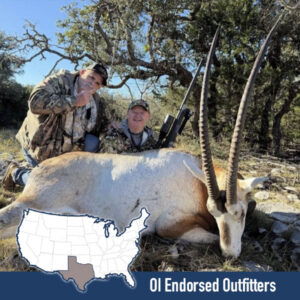
For hunters based in North America who want a lechwe experience closer to home, a handful of Texas Exotic Hunts operations manage introduced red lechwe on private ranches, offering a viable alternative when an Africa trip isn't in the cards.
The Hunting Experience
Stalking lechwe is genuinely challenging. These animals live in open, flat terrain where cover is minimal and their eyesight is sharp. In wetland settings, a stalk may require wading through knee-deep water or working through tall grass while the herd moves unpredictably between dry ground and flooded areas. Rams are typically found in bachelor groups or near the edges of larger mixed herds, and a mature ram with a full, sweeping set of horns is a legitimately impressive trophy.
Shots on lechwe are often taken at moderate to longer range across open flats, so a hunter who is comfortable shooting from field positions — sticks, prone, or kneeling — and has confirmed their zero at distance will be well prepared.
In southern Africa, the dry season (roughly May through October) is the preferred window. Water recedes, lechwe concentrate on remaining wet areas, and visibility improves across the plains. Spot-and-stalk on foot is the primary method, with a professional hunter and tracker working the wind. In some wetland settings, hunting from a mokoro (dugout canoe) or wading on foot through shallow floodplains is part of the experience.
On Texas exotic ranches, hunts are available year-round, which gives North American hunters flexibility that Africa-bound trips can't match.
Why Use a Consultant
Lechwe hunting looks simple on the surface — antelope, Africa, done. In practice, the difference between a well-run operation and a disappointing one comes down to details that aren't visible in marketing photos: the actual age class of animals on offer, how pressure is managed, how professional hunters are trained, and whether the outfitter is honest about success rates. A consultant at Outdoors International has visited these operations, talked to returning clients, and in many cases hunted there personally. That firsthand knowledge is what we bring to every conversation — and it costs you nothing extra to access it.
The dry season, generally May through October, offers the best conditions. Lower water levels concentrate lechwe near remaining wet areas, visibility across open flats improves, and cooler temperatures make for more comfortable hunting days.
Lechwe live in open, flat terrain with limited cover, which makes stalking more demanding than hunting species in thick bush. Their sharp eyesight and tendency to stay near water means careful wind management and patience are essential. Hunters should be comfortable shooting at moderate to longer range from field positions.
A flat-shooting cartridge in the .270 to .30 caliber range is a solid choice for most lechwe situations, where shots across open flats can stretch to 200–300 yards. A quality variable scope and a rifle the hunter has shot extensively from field positions — sticks, kneeling, or prone — matter more than any specific caliber.
Licensing requirements vary by country and province. In South Africa, lechwe on private properties are generally managed under standard game ranch regulations, and your professional hunter and outfitter handle the permit paperwork. Your OI consultant will walk you through exactly what documentation is required for the specific hunt you book.
Nile lechwe hunting has historically been associated with South Sudan and surrounding regions. Availability depends heavily on current political conditions and regulatory status, which shift over time. Contact an OI consultant for the most current, firsthand information on whether Nile lechwe hunts are actively available.
Yes — a small number of Texas exotic ranches manage introduced red lechwe populations and offer hunts year-round. These exotic hunts are a practical option for hunters who want the species but can't commit to an Africa itinerary on a given year.
Lechwe hunting is not technically demanding in terms of elevation or rugged terrain, but hunters should be prepared for long walks across uneven floodplain ground and, in some settings, wading through shallow water. A reasonable baseline of cardiovascular fitness and the ability to walk several miles in a day comfortably is sufficient for most lechwe hunts.
Absolutely — lechwe are frequently added to broader plains game or dangerous game itineraries in South Africa. They pair naturally with a Cape buffalo hunt or a full plains game package, since the habitats often overlap and outfitters manage multiple species on the same properties.
On well-managed properties with established lechwe populations, success rates are generally high for hunters who are adequately prepared for open-country shooting. Your OI consultant can provide realistic expectations based on current reports from specific operations, rather than generalized marketing claims.
For South African plains game hunts that include lechwe, booking six to twelve months in advance is typical for peak dry-season dates. Popular outfitters fill their best dates well ahead. Reaching out to an OI consultant early gives you the widest selection of operations and date windows.
Cancellation and modification policies vary by outfitter and are spelled out in your booking contract before you commit. Your OI consultant reviews those terms with you in advance and can advise on travel insurance options that protect your investment against unforeseen circumstances.
OI vets outfitters through a combination of in-person visits, direct hunting experience, and ongoing client feedback. Operations that don't maintain consistent standards — in animal quality, professional hunter expertise, or ethical practices — are removed from our recommendations. We work only with operations we'd send our own family to hunt with.
Wing shooting is a popular outdoor activity that involves shooting birds on the wing. It [...]
Contact us today!
We're looking forward to helping you book a great trip with an amazing outfitter.
Thank you Outdoors International!
It was an amazing steelhead fishing trip! I brought my dad along with me and we slayed the fish. If you guys aren't applying for the OI Draws, you should. They're legit!
Tyler Kirk / OI Draw Winner
I couldn't believe we won!
We won this fully guided, all-inclusive New Zealand red stag hunt in the OI Draw! I highly recommend this hunt, and Outdoors International—fantastic company, amazing meals, and hunts that are second to none.
Brandon Ball / OI Draw Winner
I'm so grateful for the opportunity!
Thank you to Outdoors International, all the PH's and their awesome staff. I made some new friends and will be back to Africa again 100%.
Brye Mangum / OI Draw Winner
My most memorable and rewarding experience.
This was my first guided hunt, and the outfitter was amazing. He was able to keep me motivated and encouraged to hold out for true trophies. I would rate him on an 11 on a scale of 1 to 10! I never thought Africa would be a reality for me. Thank you Outdoors International.
Dason Lasater / OI Draw Winner
I didn't think an experience like this was possible.
This trip, was, for me at least not just a trip, for me it was a real adventure, a real experience. I love the wilderness and this trip afforded me the opportunity to connect with the Alaskan wilderness in ways very few people do. It was an experience I will never forgot in a place I can’t wait to get back to.
Oliver Fischer
The outfitter handled everything perfectly.
We were thankful that Outdoors International hooked us up with a great outfitter because they were able to find us an acceptable alternate on short notice. Overall the two year process to get this float in was seamless and worry free. Just like it should be.
Thank you,
Stan Masneri
What an amazing experience!
The lodge was out of this world! Our rooms, the delicious food, the incredible wildlife and the scenery were amazing. Our photo safari guide was truly exceptional and had us on animals almost constantly. We saw over 30 different species and had some incredible up close experiences. Africa is amazing!